SQL vs NoSQL
Choosing the right database is one of the most impactful decisions in system design. The wrong choice leads to painful migrations.
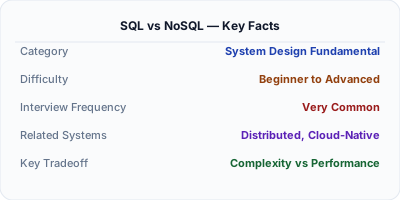
When You Need SQL vs NoSQL
Choosing the right database is one of the most impactful decisions in system design. The wrong choice leads to painful migrations. In interviews, you must justify your database choice based on data model, access patterns, and scale requirements.
What It Is
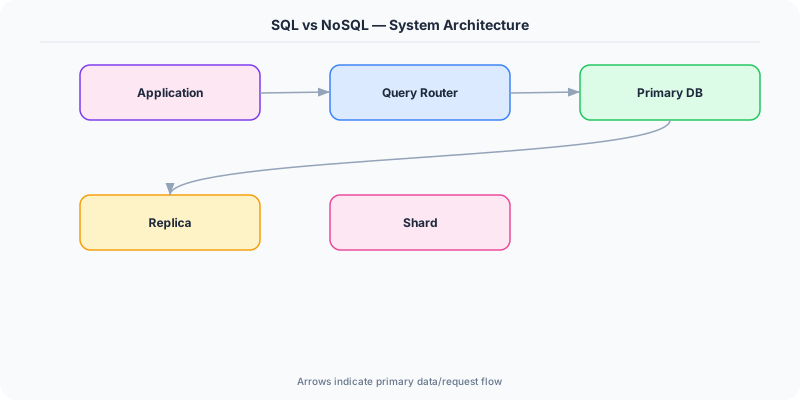
SQL databases (PostgreSQL, MySQL) store data in structured tables with schemas and support ACID transactions with SQL queries. NoSQL databases (MongoDB, Cassandra, Redis, DynamoDB) use flexible data models (document, key-value, column-family, graph) and prioritize scalability over strict consistency.
How It Works
SQL databases organize data into tables with fixed schemas. You define tables, columns, types, and relationships (foreign keys). Data is queried using SQL, which supports filtering, joining, aggregating, and sorting.
NoSQL databases have no fixed schema — each record can have different fields. This flexibility speeds up development but shifts data validation to the application layer. NoSQL databases scale by distributing data across many nodes (sharding by key).
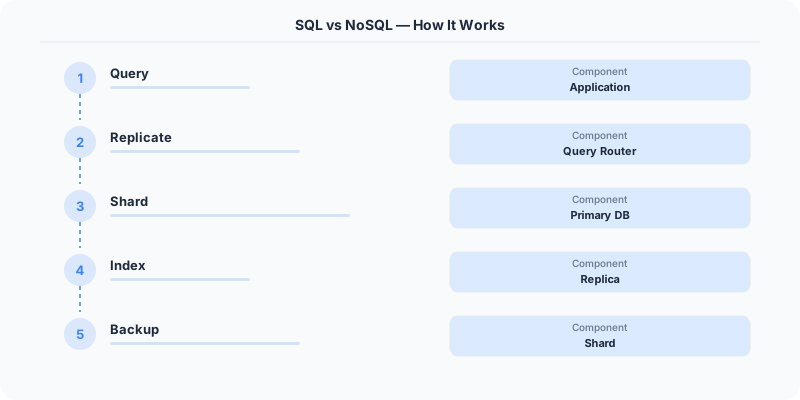
The Decision Framework
- SQL strengths: Structured data, complex queries (JOIN), ACID transactions, mature ecosystem, well-understood scaling patterns (read replicas, sharding).
- NoSQL strengths: Flexible schema, horizontal scaling, high write throughput, various data models for specific use cases.
- Document stores (MongoDB): JSON-like documents. Great for: user profiles, product catalogs, content management.
- Key-value stores (Redis, DynamoDB): Simple get/set by key. Great for: caching, session storage, leaderboards.
- Column-family (Cassandra): Wide columns, distributed. Great for: time-series data, event logs, IoT data.
- Graph databases (Neo4j): Nodes and edges. Great for: social networks, recommendation engines, fraud detection.
What the Industry Uses
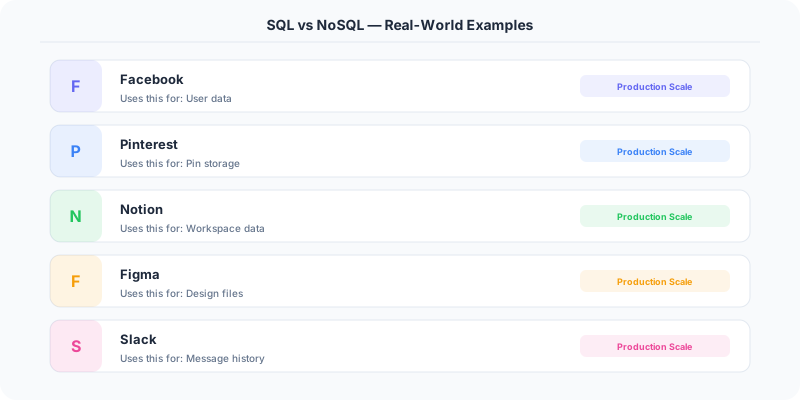
Instagram uses PostgreSQL for user data and photos metadata — ACID matters for user accounts.
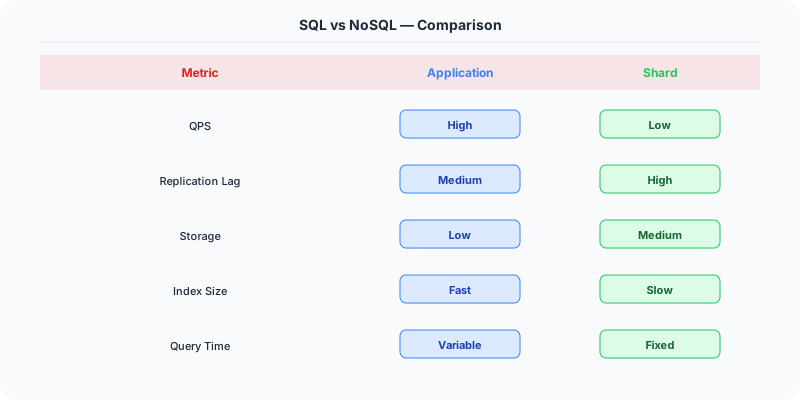
Netflix uses Cassandra for viewing history (billions of records, high write throughput) and PostgreSQL for billing (ACID required).
Uber uses a mix: PostgreSQL for trips/payments, Redis for caching/geofencing, Cassandra for analytics.
Performance and Tradeoffs
- Schema rigidity: SQL enforces schema at the database; NoSQL enforces at the application.
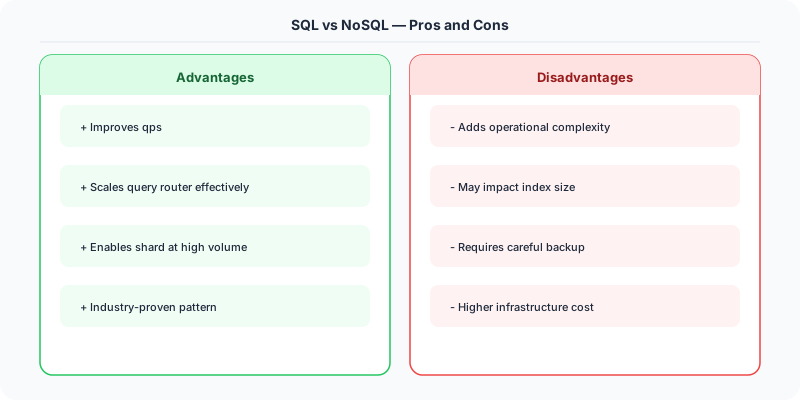
- Scalability: NoSQL scales horizontally more easily; SQL requires more effort (sharding).
- Query flexibility: SQL supports complex ad-hoc queries; NoSQL often requires denormalization and specific access patterns.
- Consistency: SQL provides strong consistency; most NoSQL offers eventual consistency.
Mistakes Engineers Make
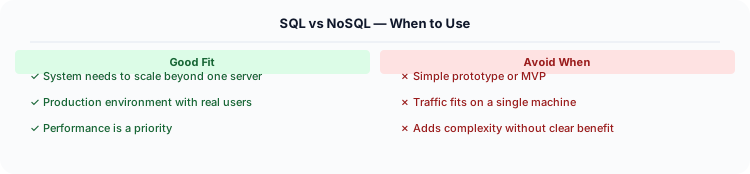
- Choosing NoSQL because it is trendy — SQL is often the better default
- Not considering access patterns before choosing a database
- Using a single database for all use cases — polyglot persistence is often the right approach
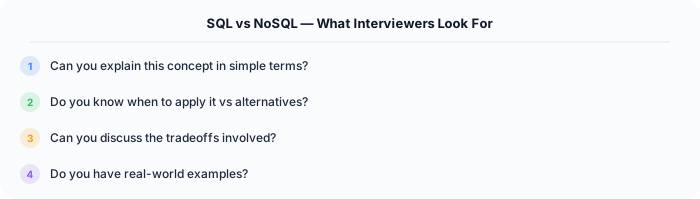
Practice These Interview Questions
- When would you use SQL vs NoSQL?
- What are the different types of NoSQL databases?
- How does a document database differ from a relational database?
- Can you use both SQL and NoSQL in the same system?
Practical Implementation for .NET Developers
In a .NET application, you would typically implement this pattern using the following approach:
ASP.NET Core setup: Create a service class that encapsulates the logic, register it with dependency injection, and inject it into your controllers or minimal API endpoints. The built-in DI container handles lifecycle management.
Entity Framework Core: For database interactions, EF Core provides the ORM layer. Use migrations for schema management and raw SQL for performance-critical queries. Consider Dapper for read-heavy paths where EF Core's overhead matters.
Azure integration: If deploying to Azure, leverage managed services — Azure Cache for Redis, Azure SQL, Azure Service Bus, Azure Cosmos DB. These eliminate operational overhead and provide built-in monitoring through Application Insights.
Testing: Use xUnit with Testcontainers for integration tests that spin up real databases in Docker. Mock external dependencies with NSubstitute. The WebApplicationFactory class lets you test your entire HTTP pipeline in-process.
Monitoring: Add Application Insights telemetry to track request latency, dependency calls, and custom metrics. Use structured logging with Serilog to make production debugging possible:
Log.Information("Processing order {OrderId} for {CustomerId}", orderId, customerId);
This gives you searchable, structured logs in Azure Monitor or Seq.
Further Reading
The Real-World Incident That Made This Famous
Understanding Sql Vs Nosql became critical after multiple high-profile production incidents at major tech companies. When systems handle millions of users, even small misunderstandings about Sql Vs Nosql can lead to cascading failures that cost millions in lost revenue and erode user trust. Companies like Netflix, Google, Amazon, and Meta have all invested heavily in mastering Sql Vs Nosql because they learned the hard way that ignoring it leads to outages.
The key lesson from these incidents: Sql Vs Nosql is not just a theoretical concept — it is a practical skill that separates engineers who build resilient systems from those who build fragile ones.
How Senior Engineers Think About This
Senior engineers approach Sql Vs Nosql differently from textbook definitions. Instead of memorizing rules, they build mental models. They ask: "What problem does Sql Vs Nosql solve? When does it fail? What are the alternatives?" This problem-first thinking leads to better design decisions because every system has unique constraints.
When evaluating Sql Vs Nosql in a system design context, experienced engineers consider the failure modes first. What happens when this component goes down? How does the system degrade? Is the degradation graceful or catastrophic? These questions reveal more about your understanding than any textbook definition.
Common Interview Mistakes
Mistake 1: Giving a textbook definition without context. Interviewers want to see you connect Sql Vs Nosql to real systems and real problems.
Mistake 2: Not discussing trade-offs. Every design decision involving Sql Vs Nosql has trade-offs. Discuss what you gain and what you give up.
Mistake 3: Overcomplicating the solution. Start with the simplest approach to Sql Vs Nosql that meets the requirements, then add complexity only when justified.
Production Checklist
- Define clear metrics for measuring the effectiveness of your Sql Vs Nosql implementation
- Set up monitoring and alerting that specifically tracks Sql Vs Nosql-related failures
- Document your Sql Vs Nosql design decisions in Architecture Decision Records (ADRs)
- Test failure scenarios related to Sql Vs Nosql in staging before production deployment
- Review and update your Sql Vs Nosql implementation quarterly as system requirements evolve
- Train new team members on the specific Sql Vs Nosql patterns used in your system
Read the original source | Content from System-Design-Overview