System Design Interview Preparation: 60-Day Plan
Quick answer: System Design Interview Preparation: 60-Day Plan
System Design Interview Preparation: 60-Day Plan is covered here as a practical system design article. A structured 60-day study plan with weekly topics, practice problems, and resources to prepare for system design interviews. Use it to turn a broad system design idea into an interview-ready checklist with practical examples and links to deeper topics.
Focus on the problem being solved, the main design choice, the failure mode, and the tradeoff you would defend in front of a senior engineer. This page is part of the DosiBridge system design knowledge graph, so it links related concepts, interview problems, tradeoffs, and references instead of leaving the topic isolated.
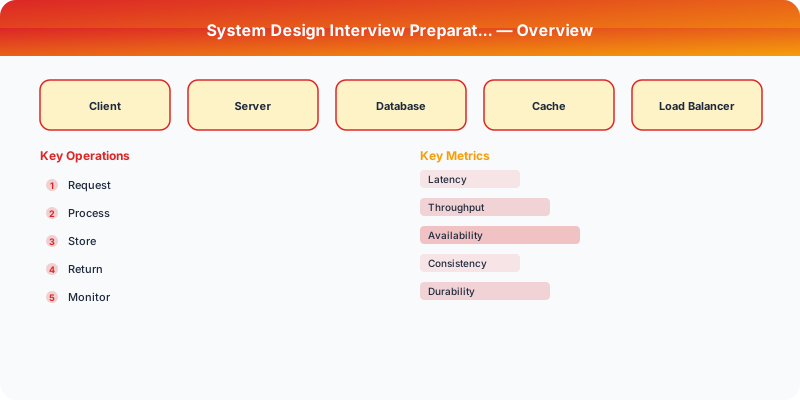
System Design Interview Preparation: 60-Day Plan
This plan assumes you can dedicate 1-2 hours per day. It progresses from fundamentals through practice to mock interviews, building knowledge in layers so each week builds on the previous one.
Weeks 1-2: Foundations
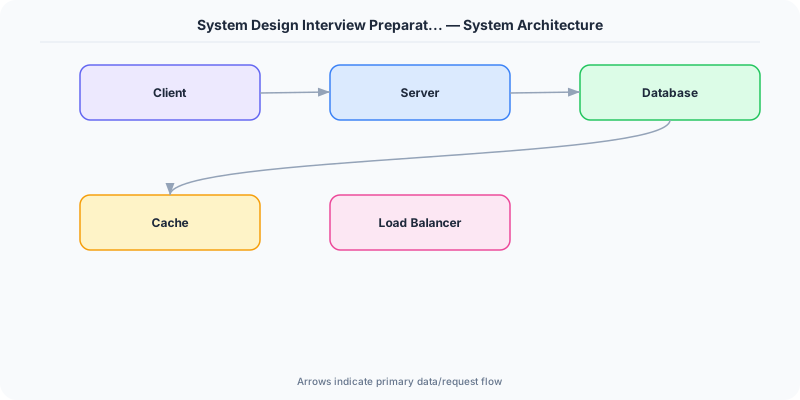
Week 1: Networking and Storage Fundamentals
- Day 1-2: HTTP/HTTPS, REST, TCP/UDP, DNS resolution
- Day 3-4: SQL vs. NoSQL databases, indexing, normalization
- Day 5-6: Caching fundamentals (Redis, Memcached), cache eviction policies (LRU, LFU)
- Day 7: Review and self-quiz on all concepts
Week 2: Distributed Systems Primitives
- Day 8-9: CAP theorem, consistency models (strong, eventual, causal)
- Day 10-11: Replication (single-leader, multi-leader, leaderless), consensus basics
- Day 12-13: Partitioning/sharding strategies, consistent hashing
- Day 14: Read the Dynamo paper summary; review and self-quiz
Weeks 3-4: Core Building Blocks
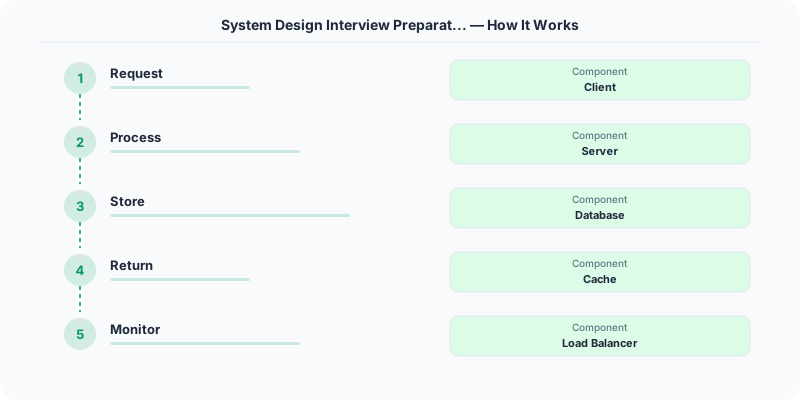
Week 3: Load Balancing and Communication
- Day 15-16: Load balancing algorithms (round-robin, least connections, consistent hashing)
- Day 17-18: Message queues (Kafka, RabbitMQ, SQS), pub/sub patterns
- Day 19-20: CDNs, reverse proxies, API gateways
- Day 21: Practice problem: Design a URL shortener
Week 4: Storage and Data Patterns
- Day 22-23: LSM-trees vs. B-trees, write-ahead logs, SSTables
- Day 24-25: Blob storage (S3), data lakes, columnar storage
- Day 26-27: Rate limiting algorithms, circuit breakers, retry patterns
- Day 28: Practice problem: Design a rate limiter
Weeks 5-6: Design Patterns
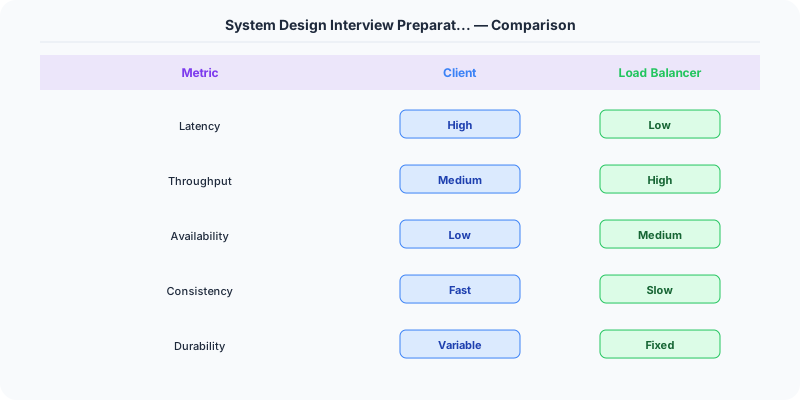
Week 5: Scalability Patterns
- Day 29-30: Read replicas, write-behind caching, CQRS
- Day 31-32: Event sourcing, saga pattern, idempotency
- Day 33-34: Microservices vs. monoliths, service discovery, API versioning
- Day 35: Practice problem: Design a notification system
Week 6: Reliability Patterns
- Day 36-37: Fault tolerance, redundancy, failover strategies
- Day 38-39: Monitoring, alerting, distributed tracing (OpenTelemetry)
- Day 40-41: Deployment strategies (blue-green, canary, rolling)
- Day 42: Practice problem: Design a chat application
Weeks 7-8: Full System Designs
Week 7: Practice Designs (Classic)
- Day 43: Design Twitter/X feed
- Day 44: Design Instagram/photo sharing
- Day 45: Design WhatsApp/messaging
- Day 46: Design YouTube/video streaming
- Day 47: Design Uber/ride sharing
- Day 48: Design Google Search (simplified)
- Day 49: Review all designs, identify common patterns
Week 8: Practice Designs (Advanced)
- Day 50: Design a distributed cache
- Day 51: Design a web crawler
- Day 52: Design a payment system
- Day 53: Design a ticket booking system (handling concurrency)
- Day 54: Design a news feed with ranking
- Day 55: Design a metrics collection and alerting system
- Day 56: Review all designs, create a "patterns cheat sheet"
Week 9: Mock Interviews and Refinement
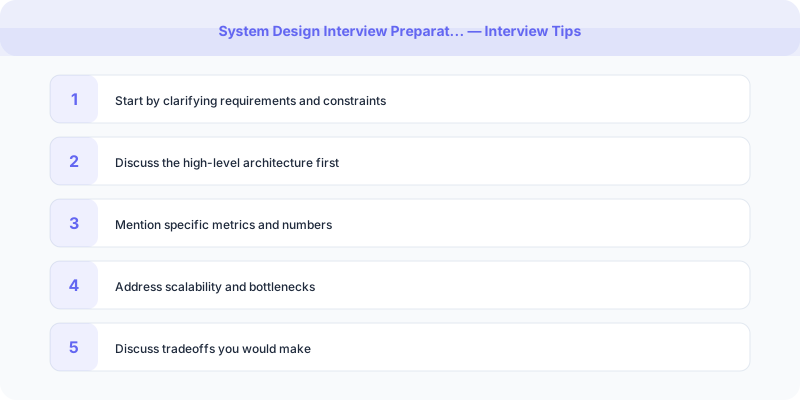
- Day 57-58: Conduct mock interviews with a peer or use online platforms (Pramp, interviewing.io). Focus on time management: 5 minutes on requirements, 5 minutes on high-level design, 20 minutes on detailed design, 5 minutes on tradeoffs.
- Day 59-60: Review mock feedback. Re-study weak areas. Create a one-page summary of the 8-10 most important patterns you want to reference in interviews.
Weekly Habits Throughout
- Read one engineering blog per week (Netflix, Uber, Stripe, Discord, Slack engineering blogs)
- Draw diagrams by hand — interviewers expect whiteboard-style sketches, not polished diagrams
- Practice explaining out loud — system design is a communication exercise as much as a technical one
- Keep a "patterns journal" — when you encounter a pattern (consistent hashing, write-ahead log, fanout-on-write), add it to a running list with one sentence on when to use it
Key Resources
- Book: Designing Data-Intensive Applications by Martin Kleppmann (the essential reference)
- Book: System Design Interview by Alex Xu (structured practice problems)
- Practice: Draw.io or Excalidraw for diagramming
- Papers: Dynamo, Kafka, GFS, MapReduce (at minimum read summaries)
Original DosiBridge notes for System Design Interview Preparation: 60-Day Plan
This section is written specifically for this page, not copied from a general system-design checklist. The useful way to study System Design Interview Preparation: 60-Day Plan is to connect the concept to a production service where growth exposes the first weak assumption in the original design. That framing changes the design discussion from definitions to operating choices.
What makes this topic distinct
- Practical Lesson: For System Design Interview Preparation: 60-Day Plan, decide the practical lesson before choosing tools; otherwise the design looks clean but fails when system changes.
- Migration Story: For System Design Interview Preparation: 60-Day Plan, decide the migration story before choosing tools; otherwise the design looks clean but fails when design changes.
- Production Symptom: For System Design Interview Preparation: 60-Day Plan, decide the production symptom before choosing tools; otherwise the design looks clean but fails when interview changes.
- Decision Checklist: For System Design Interview Preparation: 60-Day Plan, decide the decision checklist before choosing tools; otherwise the design looks clean but fails when preparation changes.
- Rollback Plan: For System Design Interview Preparation: 60-Day Plan, decide the rollback plan before choosing tools; otherwise the design looks clean but fails when 60 changes.
Production review question
If a team adopts System Design Interview Preparation: 60-Day Plan, what observable signal proves it helped instead of only making the architecture diagram more fashionable?
Practical metric to track
Track system-days health as a named dashboard or review item: combine one user-facing metric, one saturation metric, and one correctness metric. For System Design Interview Preparation: 60-Day Plan, this keeps the discussion grounded in behavior that can be measured after deployment instead of generic advice that sounds good in an interview but never gets verified.